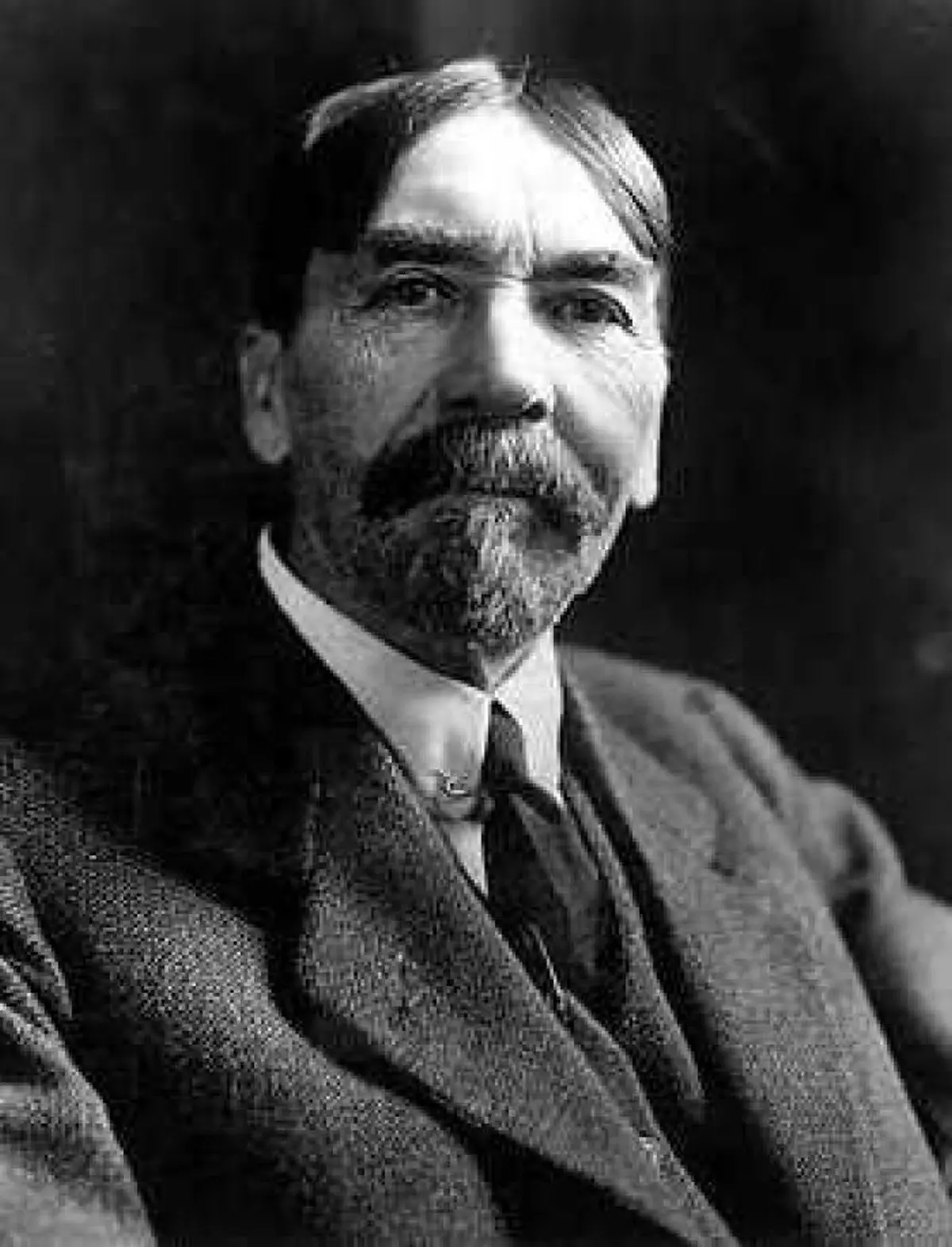
Thorstein Veblen published The Theory of the Leisure Class in 1899, when American golf amounted to a few hundred courses and a rounding error of players. He was not writing about golf. He was describing a mechanism — and golf has since become the purest example validating his theory.
His insight was that in a society without inherited rank, status must be demonstrated rather than assumed, and the demonstration requires visible proof that one’s time and money are not needed for anything useful. He called these conspicuous leisure and conspicuous consumption, and he argued they were locked in a permanent chase: as those below imitate the class above, that class must move the marker higher. He named the engine pecuniary emulation and the resulting anxiety invidious comparison.
Golf’s post-pandemic numbers describe that chase precisely.
The growth is real, and it is broad. The National Golf Foundation counted 48.1 million participants in 2025, up 50% in a decade, with 50 million expected during 2026. On-course play reached 29.1 million, an eighth straight year of growth, nearing the 2003 Tiger-era record. Americans have played more than 500 million rounds for six straight years — on roughly two thousand fewer facilities than existed at that peak. Women on-course are up 46% since 2019 and juniors 58%, and two-thirds of new golfers now begin at a simulator or entertainment venue rather than a first tee.
The conventional reading calls this democratization, and it is. But Veblen anticipated what democratization does to status: it does not lower the barrier; it drives it upward. To illustrate, median private-club initiation rose from roughly $29,000 in 2019 to about $60,000 — a 72 percent jump — and 53 percent of facilities now report full membership or a waiting list. At the top of the market, entry runs $150,000 to over $1 million. Waits are measured in years, i.e. The Country Club at Castle Pines and some lists have closed to new names entirely.
When 48 million Americans can say they play golf, saying so no longer signals anything. Both movements at once — broader access and steeper walls — are not a contradiction. It is the theory working as written. Broad access does not dissolve hierarchy; it relocates it. The member who finally clears a decade-long waitlist arrives to find a more exclusive tier already above him, its own list already closed.
What golf demonstrates better than almost any other institution is a part of Veblen’s theory that rarely gets quoted: vicarious leisure and vicarious consumption.
Status, he observed, is displayed not only through one’s own idleness but through the visible idleness and expense of others maintained on one’s behalf. The caddie who carries the bag, the uniformed staff who greet the member by name, the professional kept on call to be consulted, the spouse whose unhurried presence at the club advertises a household that needs no second income — each performs leisure so that someone else may be seen to possess it. A round of golf is a small theater of vicarious display, and the modern club has only enlarged the cast. The valet, the locker attendant, the halfway-house chef: their labor is the member’s leisure.
The consumption half of the machine is just as visible, and just as instructive. Veblen argued that to signal standing, expenditure must be not merely large but visibly wasteful — spending that serves reputation rather than use. He called it conspicuous waste, and he meant it without any moral heat; waste, to Veblen, was simply expense that returns no practical function. Golf manufactures it at industrial scale.
The tour-caliber ball a twenty-handicapper drowns in a pond costs several times what a practical ball would, and buys nothing but the sensation of playing what the professionals play. The $750 driver promises five more yards. The hand-raked bunkers, the crosscut fairway striping, the greens rolled to a speed no member can honestly handle — none of it lowers a score, and all of it is the point. The homeowner who pays a premium of hundreds of thousands of dollars for a lot bordering the eighteenth fairway. In Veblen’s terms, the waste is the product.
What is distinctly 2026 is the currency and the vocabulary.
The currency is time. Hybrid work is credited with unlocking weekday play, and a Tuesday morning round is conspicuous leisure in undisguised form — not an expensive object but the public display of a schedule that belongs to you. In an economy where most people’s hours are measured and surveilled, command of one’s own calendar has become the scarcer luxury.
The vocabulary is wellness. The industry has largely stopped selling status and now sells community, longevity, and the “third place.” Clubs market cold plunges, recovery lounges and belonging; one 2026 industry analysis insists the future of private clubs is not about status at all.
Veblen would find this the most telling turn of all. The leisure class, he observed, never names its spending as status-seeking; it calls it taste, decorum, cultivation, health. The justification always arrives dressed as something higher. That a six-figure initiation is now defended in the language of mental health and human connection rather than exclusivity does not refute him — it vindicates him.
Two American impulses are visible in 2026, and both are real: a genuine broadening of who gets to play, running in lockstep with an equal willingness to pay historic sums for precisely what that broadening destroys. These are not opposing forces. They are the same force. Every new golfer who can say they play the game makes saying so worth a little less — and sends the next dollar chasing the one place the crowd has not yet reached. Access manufactures the exclusion it seems to erase.
Scarcity itself has become the product. Veblen described the machine in 1899. Golf has spent a century perfecting it, and dressing it up as everything but status.
A note on sources
Participation, rounds-played and demographic figures are drawn from the National Golf Foundation’s 2026 Graffis Report and related NGF research. Initiation-fee and waitlist figures are drawn from Club Benchmarking’s 2025 annual report, the NGCOA 2025 Key Trends report, and 2026 private-club market reporting. Veblen quotations and concepts are from The Theory of the Leisure Class (1899).